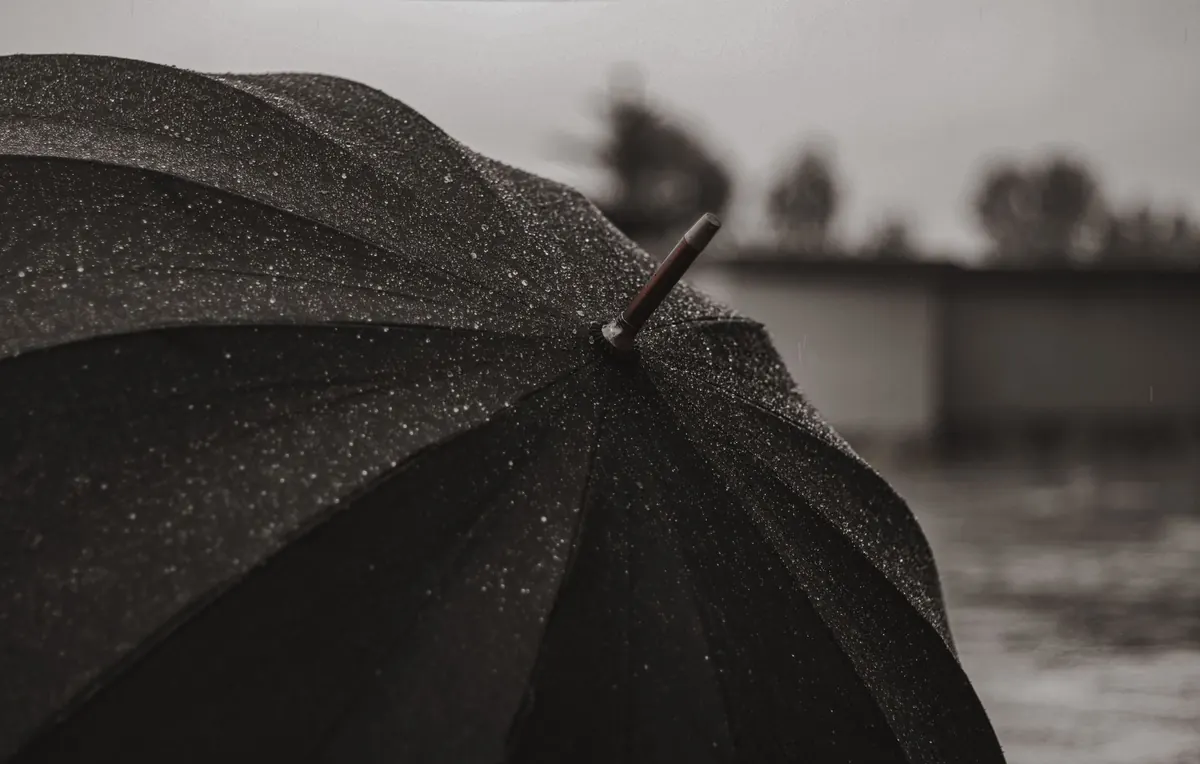
An umbrella is one of the few things you buy hoping you'll never have to think about it again. Then the first storm hits, a gust flips the canopy inside out, and you're standing at a bus stop holding a metal pretzel. Most of that disappointment is predictable before you spend a cent. Three specs tell you almost everything: how wide the canopy opens, how many ribs hold it, and what the frame is made of. Get those right and the rest is detail.
Canopy Size: The Number That Decides Whether You Stay Dry
Umbrella canopies are usually described by their arc — the curved measurement from one edge to the other, taken along the ribs. You'll see numbers like 38, 42, 46, 54 and 62 inches. That figure matters more than any marketing word on the tag.
As a rough guide: a 34 to 38 inch arc is a compact you can drop in a bag, and it covers one person's head and shoulders if you hold it carefully. A 42 to 46 inch canopy is the comfortable middle ground for a daily commute — enough room for you plus a shoulder bag, and still light enough to carry. Anything from 48 inches up starts covering two people, and golf-style canopies at 60 inches and beyond are genuinely wide, with the weight to match.
The catch is that a wider canopy catches more wind. If your route is an exposed bridge or a windswept car park, a huge canopy can work against you. Match the arc to your route, not to your ambition.
Dome shape and vents
Two canopies with the same arc can feel very different. A shallow, flat dome lets rain blow in from the sides. A deeper dome wraps around your shoulders. Look for a small vented panel or a double canopy near the top: it lets gusts pass through instead of pushing the whole thing upward, which is often what inverts an umbrella in the first place.
Rib Count: More Isn't Automatically Better
Ribs are the spokes that hold the fabric taut. Eight is the traditional count and still the most common. You'll also find six (usually on the cheapest models), ten, twelve, and occasionally sixteen on wind-resistant designs.
More ribs generally mean a smoother, rounder dome, less fabric flapping between the spokes, and a canopy that holds its shape in a breeze. The trade-offs are weight and complexity: every rib adds another hinge, and hinges are where folding umbrellas eventually fail. A well-built eight-rib umbrella will outlast a flimsy sixteen-rib one, so treat rib count as one factor, not a score.
Frame Materials: Where Cheap Umbrellas Fail First
The frame is the shaft, the ribs, and the little joints connecting them. This is the part that breaks, so it deserves the most attention.
- Steel — strong and inexpensive, but heavy, and it rusts if you store it wet. Common in budget umbrellas and some sturdy non-folding ones.
- Aluminum — light, which is why it dominates travel umbrellas. It bends rather than snaps, and once a rib is bent, the canopy never sits right again.
- Fiberglass — flexes under pressure and springs back, which is why it's popular for the ribs of wind-resistant models. Slightly heavier than aluminum, far better at surviving a gust.
- Carbon fiber — light and stiff, and priced accordingly. Nice if you want the weight savings, unnecessary for most commuters.
Check the joints and the runner — the sliding collar that pushes the ribs open. Metal hubs and reinforced joints last longer than thin plastic ones. On a folding umbrella, also count the shaft sections: two-section frames are stiffer and stronger than three-section ones, though they pack down longer.
A simple rule: if the listing names the frame material and fabric, the maker expects you to compare. If it only says "premium quality", it's hiding something.
Fabric, Weight and the Specs Nobody Puts on the Box
Canopy fabric is usually nylon, polyester or pongee, sometimes graded by thread count — 190T, 210T and up. A denser weave sheds water better and dries faster. A water-repellent coating helps, but it wears off over time, and no coating makes an umbrella waterproof in a downpour forever. Taped or sealed seams reduce drips through the stitching.
Weight is where travel umbrellas earn their keep. A compact in the 8 to 12 ounce range disappears into a backpack; a sturdy commuter model often lands between one and one and a half pounds. Much past that and you'll start leaving it at home, which defeats the point.
Open and close mechanisms
Auto-open is convenient. Auto open-and-close is more convenient still, and adds more moving parts that can jam. A manual umbrella is the simplest thing you can own and rarely fails. If you ride public transport and open your umbrella one-handed while holding a coffee, the convenience is worth the trade. Otherwise, manual is a reasonable choice.
Handles, grips and small comforts
- J-hook handle — hangs on a bag or rail; traditional but harder to grip tightly in wind.
- Straight or ergonomic grip — better control in gusts, especially with a rubberized surface.
- Reflective trim — genuinely useful on dark, rainy evenings when drivers see you late.
- Wrist strap — a small thing that saves umbrellas on windy days.
A Short Shopping Checklist
- Decide the arc: 38–42 inches for one commuter, 46–48 for two people.
- Confirm the ribs are fiberglass or a fiberglass-aluminum mix if wind is a concern.
- Check the joints and runner for metal rather than thin plastic.
- Weigh it in your hand, or read the listed weight — under a pound for a bag umbrella.
- Look for a vented canopy and water-repellent fabric, and check the return policy.
- Open and close it a few times before buying. If it feels loose or gritty, walk away.
How to Decide Without Overthinking It
Most people are best served by two umbrellas rather than one compromise: a light compact that lives in your bag for unexpected showers, and a sturdier, wider model at home or in the office for planned rainy days. Buy the sturdy one first, since it's the one you'll actually rely on. Whichever you choose, dry it open before storing it, and don't leave it folded and damp in a dark bag for weeks — that's how rust and mildew start. Take care of the frame and the fabric, and a good umbrella quietly does its job for years.
Photo: Abhishek Yadav / Pexels